

In the remote province of Saskatchewan in northern Canada, access to healthcare is a real organisational and economic challenge for patients and the healthcare system. To address this issue, the city of Saskatoon is piloting a Virtual Health Hub telehealth programme aimed at improving access to healthcare for residents. It is in this context that Melody, the remote-controlled robotic ultrasound technology developed by AdEchoTech, has been in use since 2018. This gives isolated communities local access to comprehensive ultrasound examinations. CBC News reported on this concrete step towards more equitable healthcare.
A robot now connects patients directly with ultrasound specialists located hundreds of kilometres away
In Saskatchewan, one-third of the population lives in rural areas, in remote geographical locations that are true medical deserts. Studies show that living more than 50 km from a tertiary care centre is associated with a deterioration in health, particularly among vulnerable individuals such as pregnant women, children and the elderly (Adams et al., 2022 and Seidel et al., 2006).
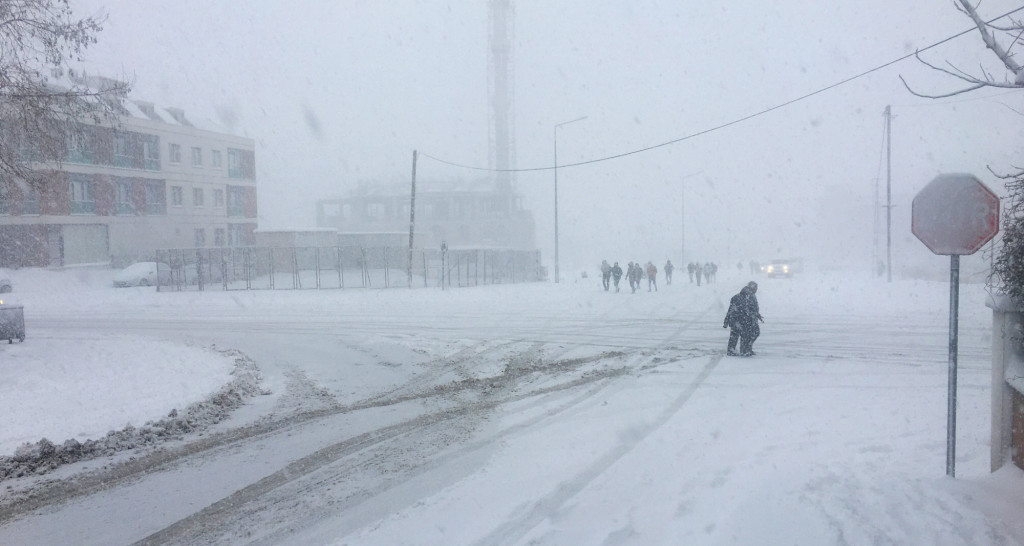
In northern Canada, roads disappear under snow for much of the year, so accessing imaging tests can be a real challenge. Residents have to fly in for a simple ultrasound scan.
The economic cost is considerable. According to CBC News, the Saskatchewan government spends more than $100 million CAD a year transporting patients from Indigenous communities.
Today, this scenario is disappearing, thanks to remote robotic ultrasound developed by AdEchoTech. Melody technology allows patients to be examined at their local hospital, while the specialist is hundreds of kilometres away. The tele-operated ultrasound robot effectively becomes the specialist’s hands, who manipulates a probe in real time, guided by a professional connected via a secure video stream. A quiet revolution with tangible benefits for local residents.
From Stony Rapids to Saskatoon: bringing remote ultrasound technology to Indigenous communities
In a report by CBC Canada (a 24-hour news channel run by Radio-Canada), one of the faces of this revolution is Daniel Powder, a resident of Stony Rapids, located 800 km from Saskatoon. The ultrasound prescribed by his doctor would have required a two-hour flight south, high costs and, above all, weeks of waiting for a diagnosis.
Today, after waiting two or three days, he is seen pushing open the door of the Athabasca Health Authority hospital near Stony Rapids, close to his home. Once there, a nurse welcomes him, settles him in, places the robot’s probe on his abdomen, and the examination begins, conducted by the ultrasound technician in Saskatoon. From hundreds of kilometres away, the doctor remotely controls the ultrasound examination in real time.
The examination delivers high-quality diagnostic results:
- the images are high quality;
- Daniel’s doctor receives a report within 48 to 72 hours;
- and, most importantly, a rapid diagnosis can be made without the patient or medical team having to travel anywhere.
These gains in time and comfort are truly transformative, revolutionising the quality of care in remote areas and enabling equal access to medical examinations for all.
‘We bring services to the community, where the people are. It’s about offering everyone the quality of care they deserve, without the barrier of distance’ explains a nurse from the programme in the CBC News report.
Spotlight on the Virtual Health Hub: remote healthcare 2.0 services to help eliminate healthcare deserts in northern Canada
Every month, around 600 residents travel south for medical appointments, often for short periods. Specialists travel there at most once a month, weather permitting.
To remedy this situation, the pioneering Virtual Health Hub telehealth programme, led by Dr Ivar Mendez, was implemented in Saskatoon. Its aim is to integrate teleimaging, remote diagnosis and medical robotics technologies to monitor rural and indigenous communities in the province, in order to break the cycle of medical deserts.
The current and future features of this ambitious programme include:
- a futuristic command centre to oversee the programme;
- rows of hospital robots, including Melody from AdEchoTech for tele-ultrasound;
- a low-dose X-ray machine powered by artificial intelligence;
- soon, the delivery of biological samples or medicines by drone;
- by the end of 2026, the construction of a centralised command centre with remote diagnostic tools in Whitecap Dakota Nation, covering a network of 30 communities.
According to estimates by Programme Director Dr. Mendez, these technologies will enable nearly 70% of indigenous patients to be treated locally (CBC News).
Scientific evaluation of the impact of remote-operated robotic ultrasound technology in rural Saskatchewan: proven effectiveness and acceptance
The benefits of the programme reported by users and practitioners in Saskatoon are supported by research findings. A study published in 2025 in the Journal of Diagnostic Medical Sonography (Khan et al.) assessed the real impact of this technology on access to care in rural areas.
The results speak for themselves:
- 100% patient satisfaction;
- 91% report no difficulties in use;
- drastic reduction in access and results times;
- very high acceptance among both patients and professionals.
The study identifies three key drivers for the success of remote robotic ultrasound:
- Accessibility: reducing the distance and cost of accessing healthcare.
- Speed: significantly accelerating diagnosis and medical decision-making, which can save lives in some cases.
- Coordination: enabling seamless communication between technicians, caregivers and radiologists.
In conclusion, these results confirm the potential of tele-robotic ultrasound to improve access to diagnosis in underserved regions. The authors emphasise the need to strengthen its dissemination, coordination and integration into healthcare practices to ensure its success.
Lessons learned for the future
This work and feedback from Saskatchewan prove that it is possible to offer remote areas a level of care equivalent to that of a large hospital, without the need for travel or heavy local infrastructure. It paves the way for international deployment.
To scale up globally, researchers identified three conditions based on their findings:
- train local assistants capable of establishing human connections and preparing patients for examinations;
- strengthen coordination between remote sites and centres where experts (ultrasound technicians) are located;
- expand the range of examinations performed locally (Doppler, obstetric or vascular monitoring, etc.).
The future of remote ultrasound therefore depends on the ability to build a flexible, human network of expertise that is firmly rooted in remote areas.
At AdEchoTech, we believe that our Melody remote ultrasound robot represents a new way of thinking about medicine: accessible, connected, but always human.
Our team is at your disposal for a presentation, demonstration or personalised support for your project (healthcare facility, private practitioner, local authority or company).
Sources :
– CBC News : Robots in the Hospital – How a Saskatchewan project is using innovative technology to provide health care to the most remote communities (March 2025).
– Khan A. et al., Enhancing Ultrasound Access in Rural Saskatchewan: A Mixed-Methods Study of Telerobotic Technology, Journal of Diagnostic Medical Sonography, 2025.
– Adams SJ, Yao S, Mondal P, Lim H, Mendez I, Babyn P: Sociodemographic and geographic disparities in obstetrical ultrasound imaging utilization: a population-based study. Acad Radiol. 2022;29(5):650–662.
– Seidel JE, Beck CA, Pocobelli G, et al: Location of residence associated with the likelihood of patient visit to the preoperative assessment clinic. BMC Health Serv Res. 2006;6:13.